Idea
Amara's Law
Roy Amara, a Stanford computer scientist, observed a peculiar pattern in how we perceive technological change. "People tend to overestimate the impact of new technology in the short run, but underestimate it in the long run," he noted in what became known as Amara's Law.
Short-term predictions are always optimistic and long-term predictions are always pessimistic.
Bill Gates echoed this sentiment: "People often overestimate what will happen in the next two years and underestimate what will happen in the next ten."
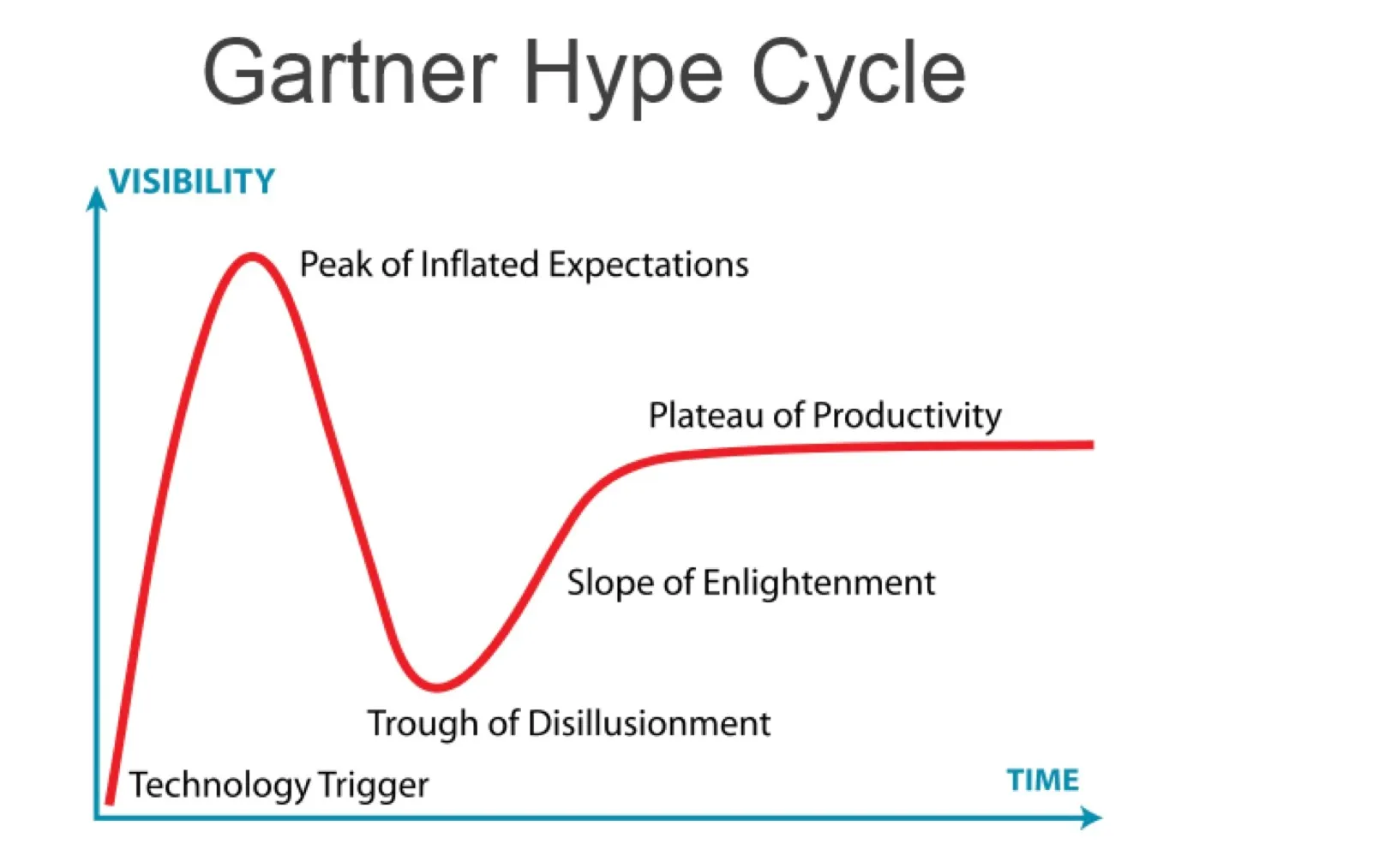
This pattern creates a predictable hype cycle—wild excitement followed by The Valley of Disappointment, before the true impact emerges. Matt Ridley suggests in "How Innovation Works" that we typically get our predictions right around the 15-year mark. The lesson? Progress is incremental, not overnight. Everything compounds.
Vision requires patient navigation and consistent effort, even when immediate results seem underwhelming.
You get closer to your goals through slow and steady navigation. It's important that you have a vision to guide you along the way. All progress happens incrementally, not overnight. Bill Gates said, "People often overestimate what will happen in the next two years and underestimate what will happen in the next ten." Just because progress is incremental doesn't mean you should ignore it or slack off because of the perception of time. Bill wrote this to warn others to not ignore their competitors — don't ignore the threats to your vision that exist today. Everything compounds.