Idea
Plato's Cave
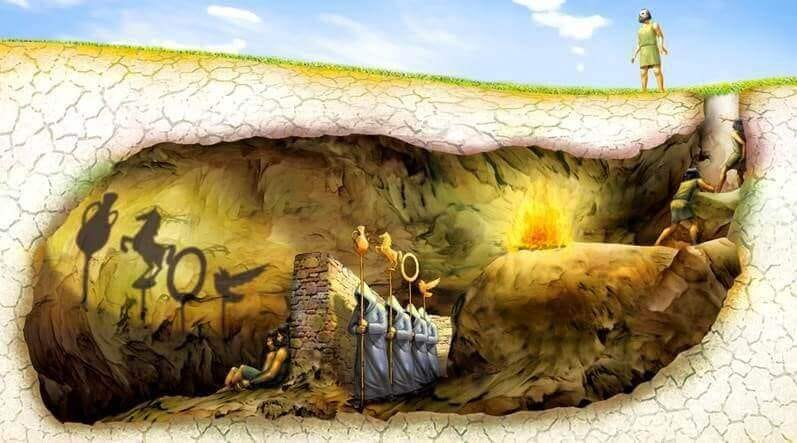 Plato believed the world of ideas was more real than our physical reality. A chair might break or decay, but the idea of "chair" remains perfect and eternal. "You never saw, heard, touched, tasted, or smelled the abstract number 7," though you've encountered seven horses or seven chairs.
In Plato's famous metaphor, we see only shadows of reality cast on a wall—never true reality itself. This perspective explains why mathematicians often say they "discovered" rather than "created" their findings. Yet meaning itself proves elusive. A rock becomes a chair at a picnic but not in a living room. Dictionaries must define words using other words, creating an inevitable circularity.
How then does a child learn their first language with no reference point?
The answer lies in usage—meaning emerges not from absolute definitions but from how words function in context. When a major dictionary admitted they could only describe rather than prescribe language, many were angered by this apparent lack of absolute meaning.