Idea
Survivorship Bias
Abraham Wald's analysis of WWII bomber damage is the classic illustration of survivorship bias: the bullet holes on returning planes showed where aircraft could take hits and still make it home, so reinforcing those spots was wasted armor. The real vulnerability was hidden in the missing data—the planes that never returned. In modern decision-making, survivorship bias convinces founders that standout companies validate a strategy while ignoring the startups that died following the same playbook. Performance marketing case studies focus on top decile wins; VC blogs amplify unicorn trajectories; personal development advice spotlights the outlier who outworked everyone. The pattern is consistent: we overweight visible success stories and underweight the silent majority of failures.
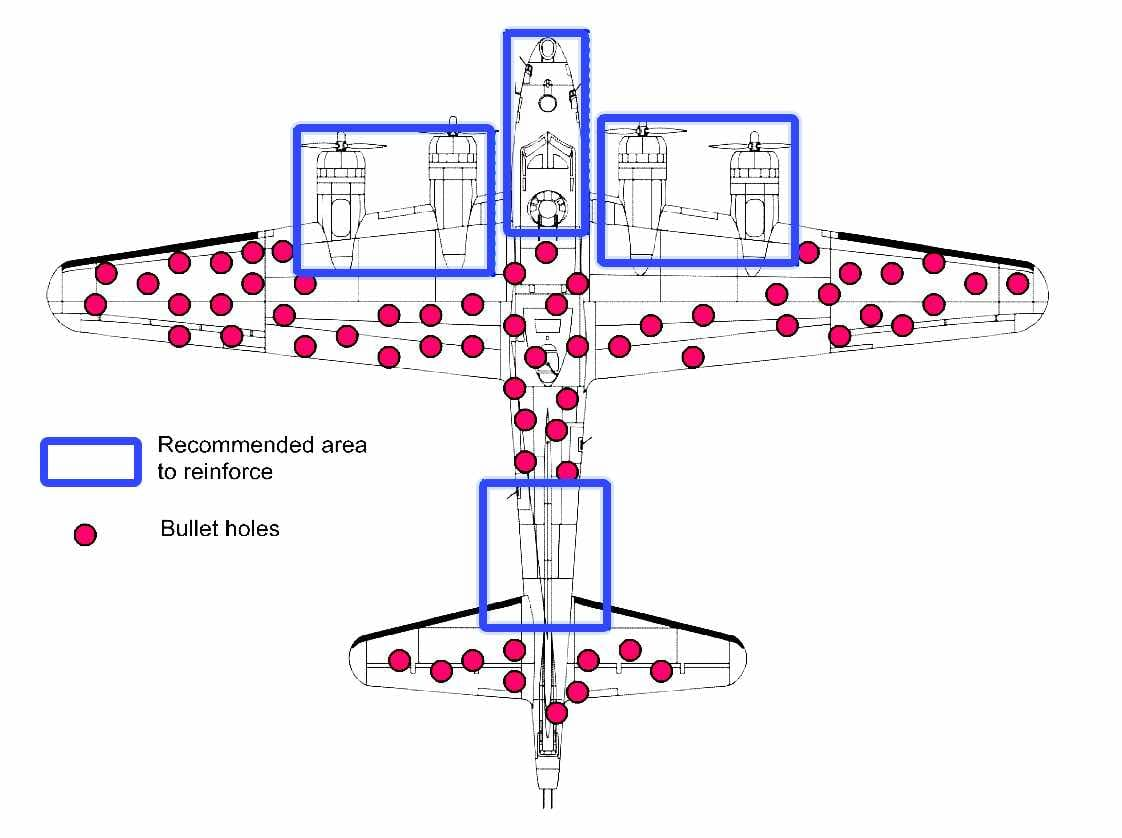
To counter survivorship bias, deliberately hunt for the null results. Before copying a strategy, ask, "How many teams tried this and failed? What conditions allowed the survivors to win?" Build feedback loops that surface failed experiments in retrospectives, and require postmortems for both successful and abandoned initiatives. In product strategy, supplement customer interviews with churn analysis to understand who left and why. Applying Context Engineering principles—capturing the states, constraints, and selection process of the original success—helps you evaluate whether the playbook fits your environment or if you're just mimicking the visible winners.
- Context engineering exposes the hidden denominator that survivorship bias erases. Embedding that context into decision loops—retrospectives, experiment logs, knowledge systems—prevents blindly porting “successful” playbooks into environments where the missing parameters don’t hold.