Idea
The Four Futures
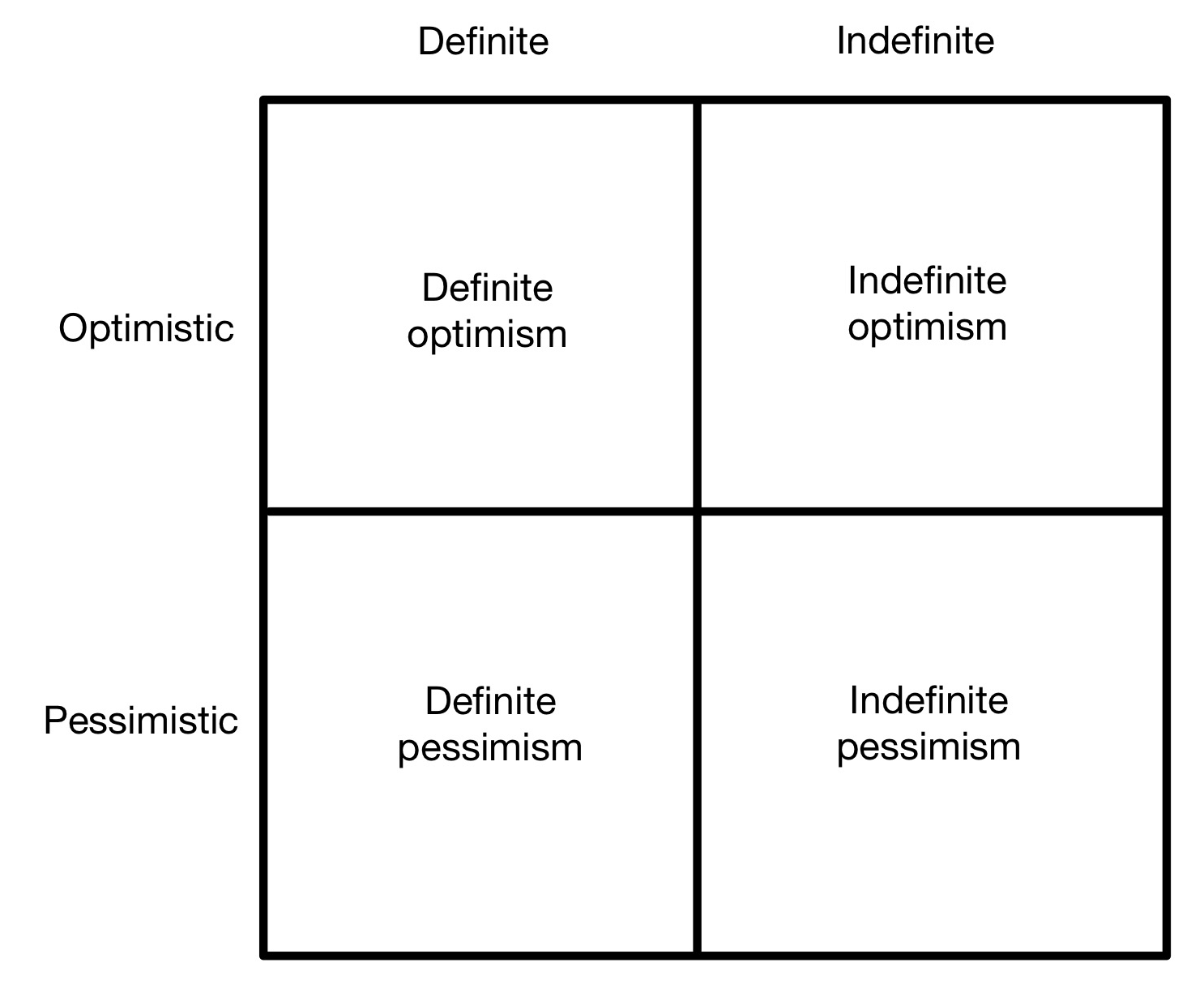 Peter Thiel, in his book "Zero to One," outlines four views of the future based on optimism and definiteness. Indefinite pessimists, like modern Europeans, expect decline but lack plans. Definite pessimists, exemplified by China, foresee a bleak future and prepare accordingly. Definite optimists, prevalent in the U.S. until the 1960s, believed in progress through planning. Indefinite optimists, dominating American thought since 1982, expect a better future without specific plans. Thiel suggests that our view of the future shapes our actions and society, challenging us to consider which perspective we adopt and its consequences.
The philosopher David Deutsch points out something surprising about the extremes: blind optimism and blind pessimism are mirror images of the same error. The builders of the Titanic declared it "practically unsinkable"—blind optimism that ignored unforeseeable disasters. The Precautionary Principle, blind pessimism's modern form, argues we should avoid anything not proven safe—assuming disaster lurks in the unknown.
"Both are prophetic," Deutsch writes. "Both purport to know unknowable things about the future of knowledge." The blind optimist proceeds as if certain the bad won't happen. The blind pessimist proceeds as if certain it will. Neither can actually know.
True optimism, Deutsch argues, is something else entirely: not a prophecy of success, but an explanation of failure. It says there is no fundamental barrier preventing progress. When we fail, it's not because we've reached some limit, but because we didn't know enough, in time. Nearly all failures, and nearly all successes, are yet to come.